
"My Lord Bishop of Orléans, my daughters have a craving for Cotignac from Orléans; please send for some"...
Back to
Quince Roots
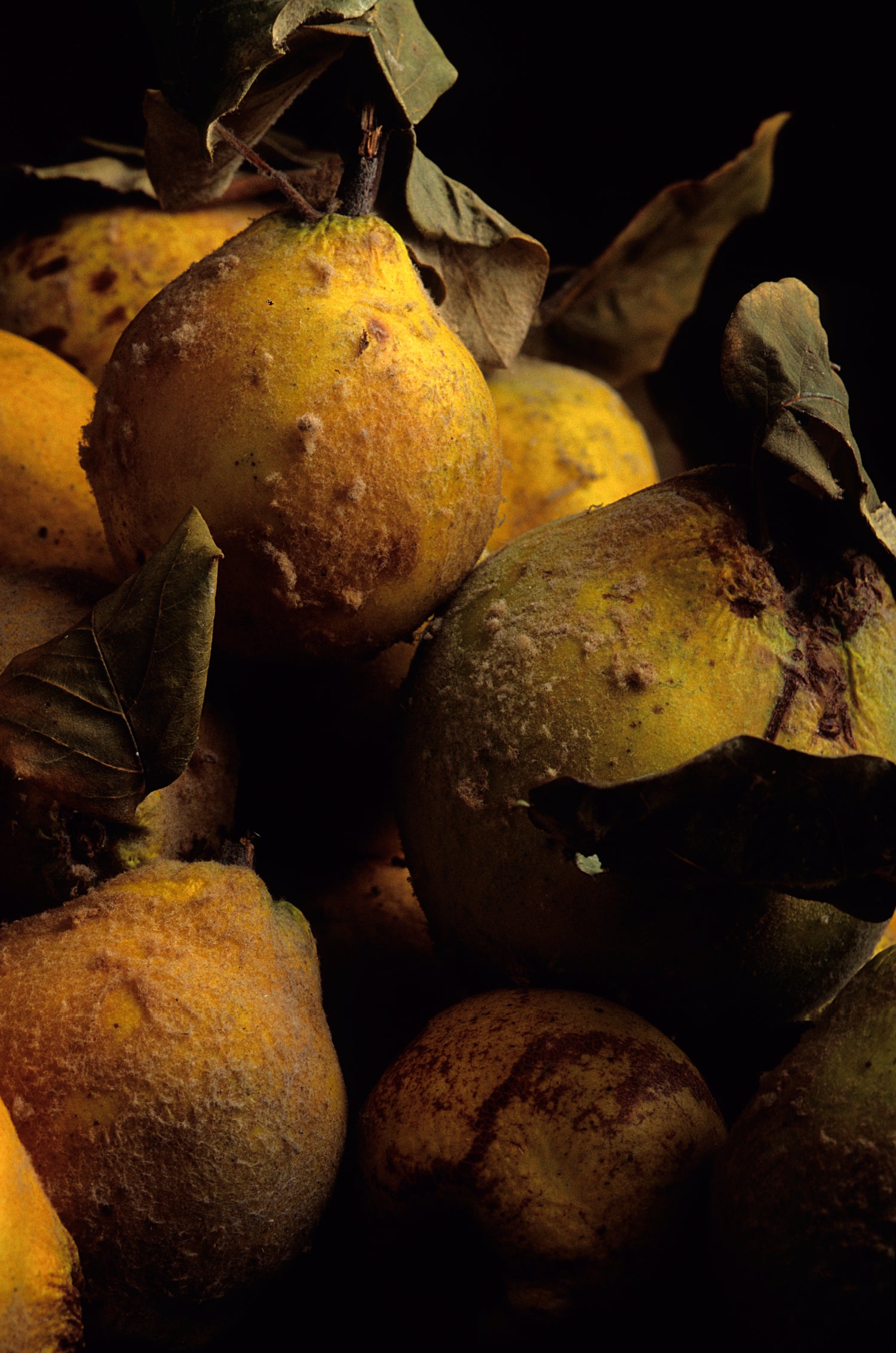
Spread by the Greeks and then the Romans throughout the Mediterranean basin, the first quince trees were already being cultivated in antiquity. Their earliest traces date back to 2,000 years before Christ in the Persian Gulf—a region that was then believed to be the earthly paradise.
At that time, the quince was so highly prized that even poets wrote about it, singing of it by its Greek name, chrysomela—the “golden apple” or “golden fruit”—thus imbuing it with its first divine connotations. So it is only natural to wonder: was the famous apple bitten by Eve, and then Adam, not actually a quince?
What legend does confirm, however, is that the temptation to bite into it—for its spicy flavor and almost intoxicating aroma—is met by the bitterness of its flesh when eaten raw.
A symbol of fertility, the quince also became the fruit given to newlyweds, in the hope that it would bring them fecundity and happiness. It was later, after being grafted to adapt to more temperate climates, that the quince made its way to France.

Became
A specialty of Orléans
Harvested in September at full maturity, the quince finally reveals its full potential. For this fleshy and capricious fruit does not give itself up easily. It is only once transformed—into paste, jam, or Cotignac d'Orléans—that it reveals its most subtle aromas and beneficial properties.
As early as the 16th century, François Lemaire, in Histoire et Antiquités de la ville d’Orléans, praised its virtues:
“If taken at the beginning of a meal, it strengthens the stomach, aids digestion, and prevents the vapors that rise to the brain after drinking. If taken after a meal, it gently loosens the bowels. It is said that if a pregnant woman takes it often, she will give birth to a clever and ingenious child.”
Apothecaries were the first to trade in Cotignac. And it was one of them—originally from the Var—who brought its recipe to Orléans in the 14th century. Thanks to its beautiful golden hue and rare delicacy, Cotignac then spread throughout the kingdom, becoming a symbol of abundance and hospitality. In Orléans, it is offered to distinguished guests, ambassadors, princes, or visiting prelates: a refined gesture steeped in history.

a gift of tradition
A gesture of hospitality
Over the centuries, this delicacy has won its place of honor. It gradually becomes the confection of kings. When Orléans wishes to honor his visiting guests, it is almost certain that a cotignac is offered to them. The list of those who have received one is long: from Francis I to the King of Navarre, passing through Anne of Austria, Louis XIV, or even Napoleon III, the cotignac withstands the years and makes its way to the palate of our contemporaries. It is said that Charles de Gaulle, Giscard d’Estaing, or even Mitterrand were fond of them.
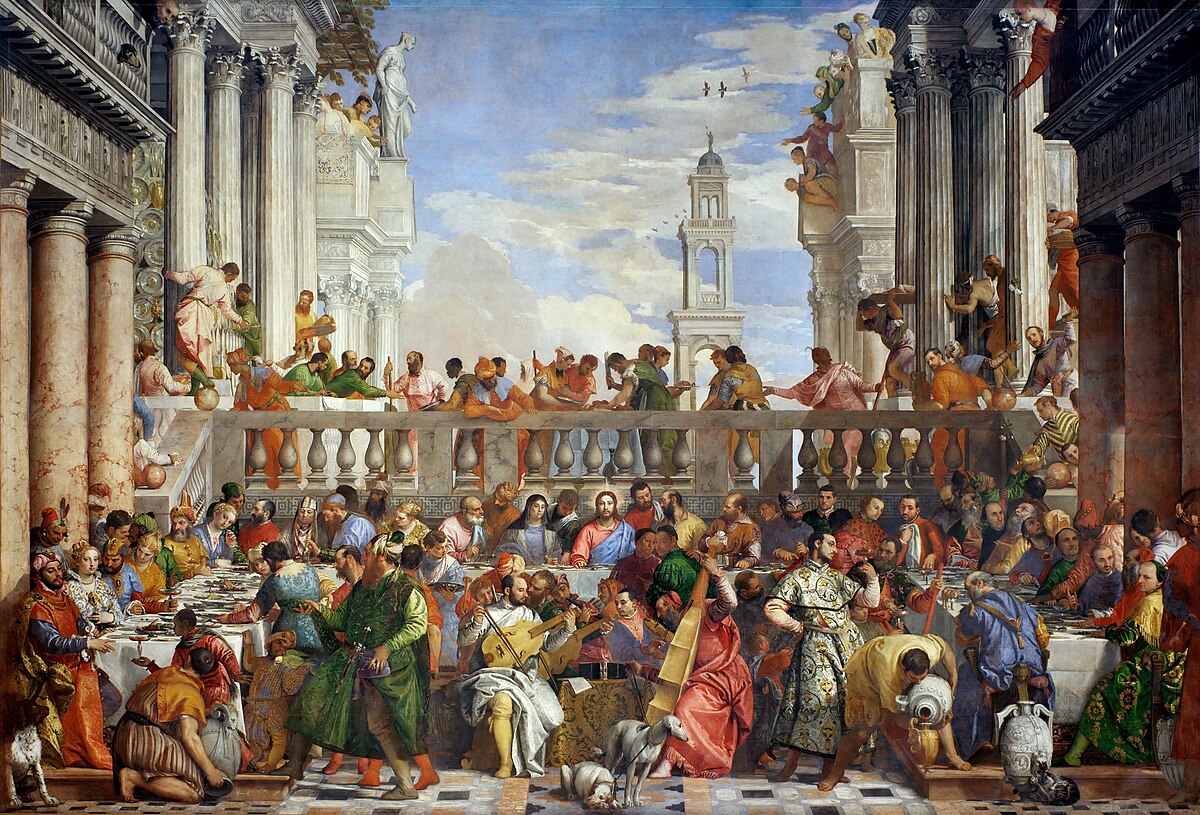
The Cotignac even made its way onto the famous canvas by Veronese, The Wedding at Cana. In the 1990s, the Louvre then contacted Benoît Gouchault, the last confectioner of Cotignacs, to produce a limited edition on the occasion of the vernissage of this iconic Renaissance painting, freshly restored.
living tradition
Preserved expertise
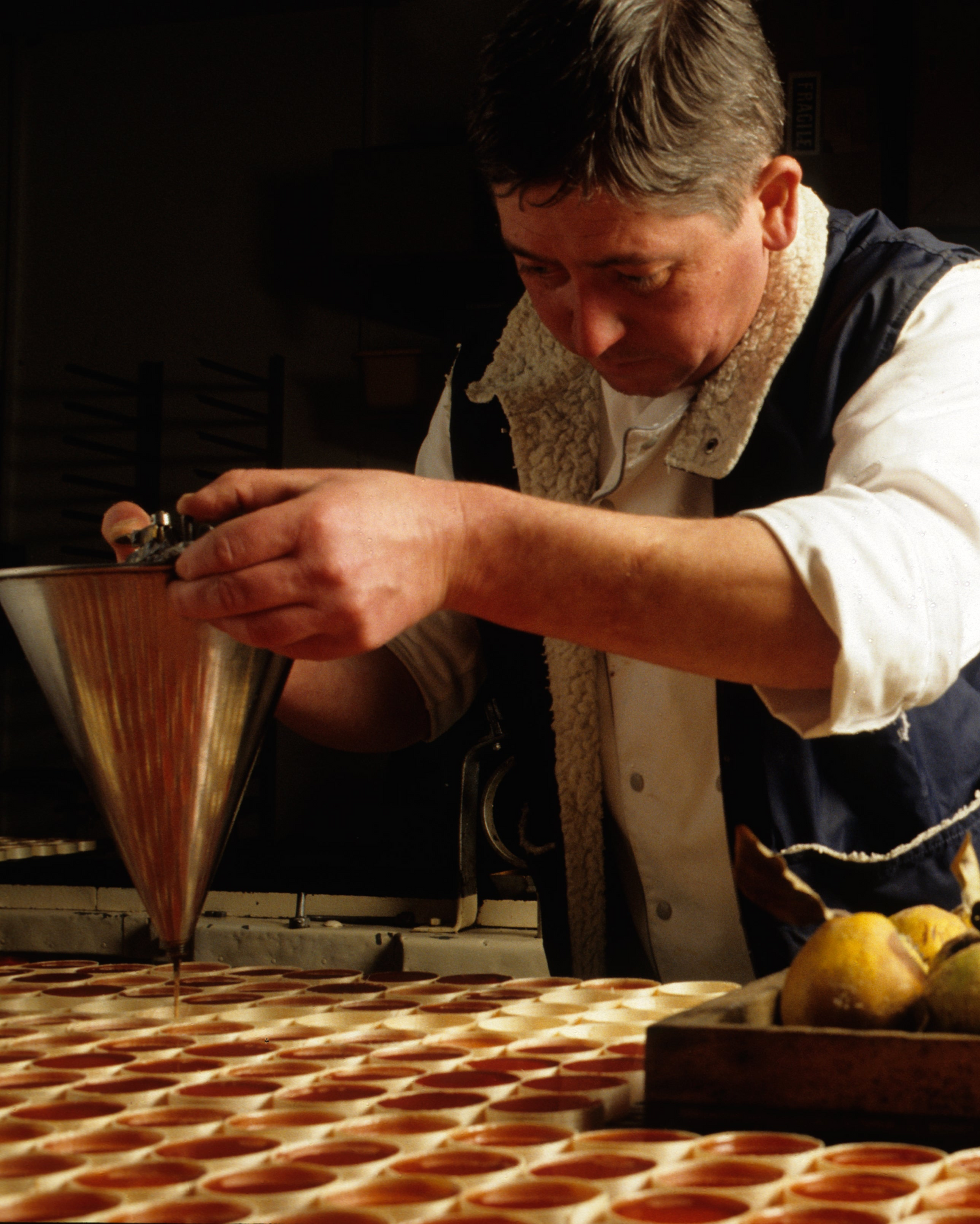
The secret recipe was passed from confectioner to confectioner until it reached Benoît Gouchault. It has, of course, evolved since the one described in the 17th-century Richelet dictionary: quince juice was then mixed with wine and honey.
Today, wine and honey have been replaced by sugar and glucose, mixed with quince juice heated slowly in copper basins. Through the ages, it is the craft of the confectioner that endures, faithful to a unique know-how.
Since 1975, Maison Gouchault has preserved this heritage, for the pleasure of young and old, nostalgic for a return to childhood or the taste of a corner of France.

Our retailers
Find Maison Gouchault’s Cotignac d’Orléans in a selection of partner boutiques.